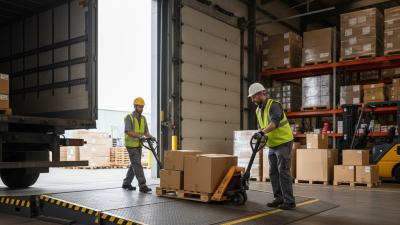
Choosing the right mechanical dock leveler in 2026 requires more than comparing purchase prices. Loading areas now face heavier pallet loads, faster trailer turnover, and tighter safety expectations. OSHA’s 29 CFR 1910.26 requires dockboards to be secured and capable of supporting imposed loads. That detail matters when steel plates meet forklifts, wet tires, and uneven trailer floors.
MHI’s 2024 Annual Industry Report identifies labor shortages, supply-chain resilience, and technology investment as continuing material-handling priorities. However, automation does not eliminate basic dock risks. A properly specified mechanical dock leveler still provides a dependable bridge when power is unavailable. It can also reduce maintenance complexity, although its pull-chain operation demands disciplined inspections. Rick Goggins, an OSHA safety and health specialist, stresses the practical principle: “Dockboards must be secured and their capacity must be marked.” Buyers should treat that guidance as a design checkpoint, not a paperwork exercise.
The strongest choice for 2026 may not be the most advanced model. It may be the leveler that matches trailer height variation, forklift weight, lip extension, pit dimensions, and daily cycling. Look closely. A bent lip, worn hinge, or damaged chain can turn a routine transfer into a serious interruption. Product brochures rarely show those moments. This guide compares mechanical dock levelers through capacity, durability, ergonomics, service access, and total ownership cost. Some assumptions may deserve challenge. A lower upfront price can become expensive when inspections, repairs, and downtime accumulate. Reliable selection begins with measured loading conditions, verified specifications, and honest maintenance expectations.
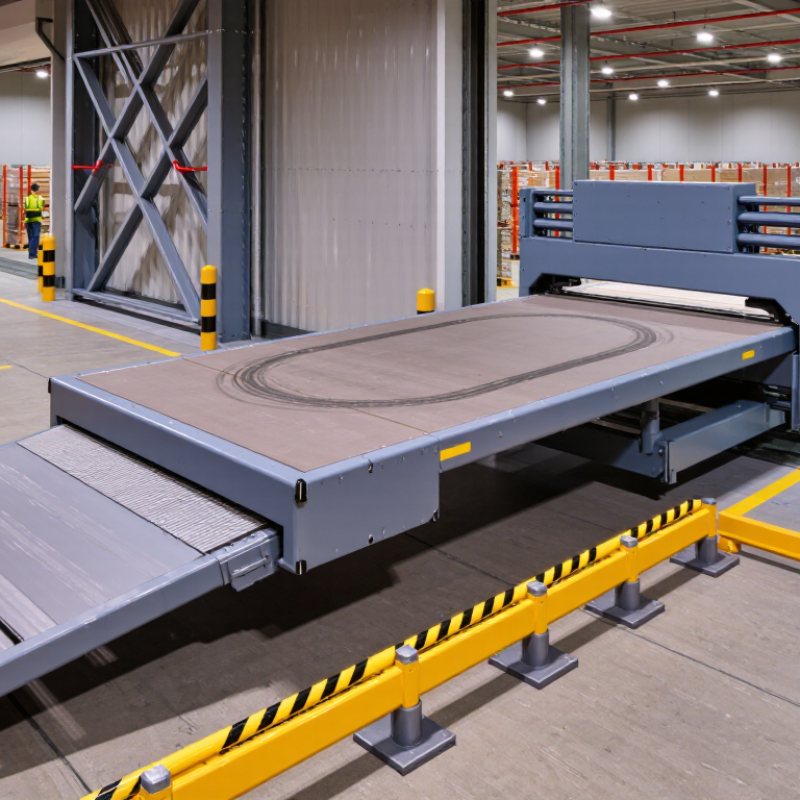
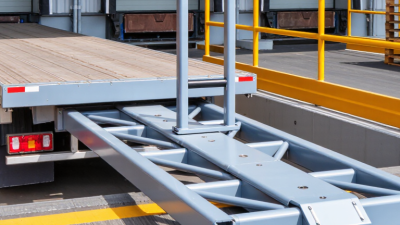
A mechanical dock leveler bridges the gap between a loading dock and a trailer. Its steel deck rests inside a recessed pit. The operator pulls a chain or handle, raising the deck with spring assistance. The hinged lip then extends onto the trailer floor. A forklift can cross the transition with fewer shocks. The process is simple, not effortless.
The best choice depends on traffic, load weight, trailer height, and maintenance skill. ANSI MH30.1 guidance emphasizes structural capacity, safe operation, and proper installation. OSHA also identifies dockboards, trailer movement, and falls as important warehouse hazards. The U.S. Bureau of Labor Statistics reported 2,607,900 recordable private-industry injuries in 2023. That figure is not dock-specific, but it shows why small access details deserve attention. MHI’s 2024 Annual Industry Report found that 55% of respondents planned to increase supply-chain technology investment. Still, a mechanical leveler may suit facilities seeking predictable, low-complexity equipment.
Tips: Check the pit dimensions before ordering. Confirm the rated capacity with a qualified installer. Inspect springs, hinges, lip plates, and welds regularly. Keep the deck dry and clear. A neglected leveler becomes difficult to operate. I would not call any model universally “top.” A quieter, smoother unit may fail if trailer heights vary widely or operators skip inspections.
For 2026 buyers, a top mechanical dock leveler starts with predictable control, not flashy extras. The deck should rise smoothly under normal loading and settle without sudden movement. A robust steel frame, reinforced hinges, and a replaceable lip matter at busy docks. Look for a published load rating that matches real forklift traffic, including dynamic impact. Static capacity alone can mislead.
Operators need clear release handles, non-slip walking surfaces, and protected pinch points. The lip must reach the trailer floor securely, even when truck heights vary. Mechanical systems avoid motor dependence, but they still demand correct positioning and routine inspection. A visible maintenance log, grease points, and accessible springs help technicians find wear before a failure. Small details count. Weather seals, drainage paths, and corrosion-resistant finishes can extend service life in wet yards. But finish alone cannot rescue poor installation.
In field evaluations, I would check the leveler with loaded and unloaded trailers, not only a showroom demonstration. Measure deck deflection, lip engagement, and operator effort. Ask for installation tolerances, inspection intervals, repair procedures, and evidence behind every capacity claim. A sensible buyer also compares downtime risk against purchase price. The cheapest unit may become expensive when one bent hinge stops a shift. No model fits every dock. That is the part many purchasing teams underestimate.
What Is the Top Mechanical Dock Leveler for 2026 Buyers?
The best mechanical dock leveler is not always the highest-capacity model. Buyers should match capacity with real trailer weights, forklift loads, and daily traffic. A 30,000-pound rating may suit many warehouses, but repeated overloads can shorten service life. Check both dynamic and static capacity. They are not interchangeable.
Size needs equal attention. Measure the dock height, pit width, deck length, and lip extension before comparing equipment. A leveler that is too short can create a steep forklift approach. That increases impact, noise, and product movement. A longer deck may improve access, but it also needs enough pit space. Small errors become expensive.
Safety details deserve a hands-on review. Look for controlled return movement, visible maintenance points, strong lip support, and effective vehicle restraint coordination. Confirm that the design fits applicable workplace safety rules and recognized regional standards. Ask for load-test records, installation tolerances, and inspection guidance. Do not rely only on a product sheet.
Field conditions often change the decision. Wet floors, cold weather, uneven trailers, and inexperienced operators can expose weaknesses quickly. An experienced installer should inspect the dock face and traffic pattern before selection. I would also question any rating that lacks test conditions. A perfect comparison is difficult. Real use is less predictable.
For 2026 buyers, a mechanical dock leveler’s long-term value begins before delivery. Measure the dock pit, door clearance, truck height range, and expected load frequency. A leveler that fits poorly can create steep transitions and repeated impact damage. Confirm the rated capacity matches loaded forklifts, not empty vehicles. Ask the installer to verify pit dimensions, lip extension, rear hinge clearance, and drainage. Small errors matter.
Installation quality often separates durable equipment from expensive repairs. The base frame should sit level, with welds and anchors checked before concrete work is finished. Access around springs, hinges, and the operating chain also deserves attention. Maintenance becomes difficult when these parts are buried or blocked. Keep the traffic path clean. Dirt and loose debris can accelerate hinge wear. It sounds simple, but busy docks often neglect it.
A practical maintenance plan includes monthly visual inspections, lubrication at specified points, and prompt replacement of worn pins, springs, or lip components. Operators should report unusual noise, slow movement, uneven travel, or a lip that fails to rest securely. Maintenance records help identify repeated failures and support warranty discussions. They also reveal whether usage exceeds the original assumptions. A checklist helps, though it can still miss problems during peak shipping periods. Independent inspections may expose installation shortcuts that routine staff overlook. Safety barriers, clear lighting, and trained operators protect both equipment and people.
A practical, brand-neutral comparison of common mechanical dock leveler configurations for preliminary specification and long-term value assessment.
| Evaluation Dimension | Standard Mechanical Capacity: 30,000 lb |
Heavy-Duty Mechanical Capacity: 35,000–40,000 lb |
Low-Profile Mechanical Capacity: 20,000–30,000 lb |
Recommended 2026 Buyer Check |
|---|---|---|---|---|
| Typical application | General distribution, retail, and mixed truck traffic | High-volume distribution, industrial, and frequent forklift traffic | Sites with limited pit depth or challenging existing construction | Match the rating to the heaviest combined loading condition, not the average shipment |
| Common platform width | 6 ft or 6 ft 6 in | 6 ft 6 in or 7 ft | 6 ft or 6 ft 6 in | Confirm trailer width, dock-door clearance, and forklift turning requirements |
| Common platform length | 8 ft or 10 ft | 10 ft or 12 ft | 8 ft or 10 ft | Longer platforms can improve grade transition but require more pit depth and structural space |
| Typical vertical range | Approximately 12 in above to 12 in below dock height | Approximately 12 in above to 12 in below dock height | Often approximately 8–10 in above to 8–10 in below dock height | Measure the actual trailer-bed-height range before selecting the deck and lip geometry |
| Operating method | Manual pull-chain or spring-assisted mechanical operation; the vehicle restraint and dock procedures remain essential safety controls | Choose a mechanism that warehouse staff can operate consistently without excessive force | ||
| Typical lip length | 16 in or 18 in | 16 in, 18 in, or 20 in | 16 in or 18 in | Verify that the lip provides adequate trailer overlap while avoiding interference with the trailer floor or rear impact guard |
| Structural requirements | Reinforced pit walls, a suitable rear hinge area, and a structurally sound dock edge | Heavier pit reinforcement, stronger hinge assemblies, and verified load-transfer details | Existing concrete and pit geometry must be checked carefully because reduced depth may limit adjustment | A structural review is required for new installations, replacements, and damaged pits |
| New-construction pit depth | Commonly about 24 in, subject to the selected model and dock design | Commonly about 24 in or greater, depending on deck length and load rating | Often less than a conventional pit, but the exact requirement is configuration-specific | Use the installation drawing rather than a generic pit-depth assumption |
| Installation complexity | Moderate; requires accurate pit dimensions, alignment, anchoring, and deck adjustment | Moderate to high; heavier components and reinforcement increase handling and alignment demands | Moderate to high during retrofit because existing concrete may require modification | Include demolition, concrete repair, shimming, welding or anchoring, and commissioning in the budget |
| Dock approach condition | Best on a level approach with adequate trailer positioning space | Best where repeated loading and higher impact exposure are expected | Suitable when the approach and pit geometry restrict standard installation options | Correct drainage, dock bumpers, vehicle restraint, and approach slope before installation |
| Routine inspection frequency | At least monthly, plus pre-use checks and inspections after unusual impact | At least monthly, with more frequent checks in high-cycle operations | At least monthly, with close attention to alignment and travel limits | Follow the equipment manual, site risk assessment, and applicable workplace-safety requirements |
| Key lubrication points | Hinges, pivot points, rollers, and other specified moving joints | Hinges, pivot points, springs, rollers, and other specified moving joints | Hinges, pivot points, rollers, and adjustment components | Use the specified lubricant and avoid contaminating the deck surface or truck-contact areas |
| Common wear items | Lip hinge pins, springs, bumpers, welds, rollers, and deck-edge components | Lip hinge pins, springs, welds, rollers, bumpers, and high-impact structural components | Hinge components, springs, rollers, bumpers, and alignment hardware | Keep replacement parts available for components that can interrupt loading operations |
| Drainage and corrosion exposure | Standing water can accelerate corrosion in the pit, hinges, and structural members | High exposure can increase maintenance demand despite heavier construction | Restricted pit access can make moisture detection and cleaning more difficult | Provide pit drainage, remove debris, and repair damaged coatings or corrosion promptly |
| Typical maintenance burden | Low to moderate when inspections, lubrication, cleaning, and adjustments are performed on schedule | Moderate because higher cycles and loads increase wear and inspection requirements | Moderate; retrofit constraints can make adjustment and repair access more difficult | Evaluate labor access and planned downtime, not only the initial purchase price |
| Expected service-life drivers | Traffic cycles, impact frequency, load distribution, corrosion control, and maintenance quality | Traffic cycles, overload exposure, impact frequency, structural design, and maintenance quality | Pit condition, alignment, load distribution, corrosion control, and maintenance access | Service life cannot be guaranteed from capacity alone; installation quality and operating discipline are decisive |
| Best value profile | Balanced choice for typical loading and moderate operating cycles | Best fit where higher capacity and repeated heavy use justify higher installation cost | Useful for compatible retrofit sites where conventional pit construction is impractical | Prioritize total cost of ownership, safety, uptime, and maintainability over lowest initial price |
| Pre-purchase measurements | Dock height, pit width and length, pit depth, approach slope, trailer-bed heights, door width, bumper projection, concrete condition, drainage, and available service clearance | A documented site survey is the most reliable way to prevent costly fitment and installation problems | ||
Selecting the best mechanical dock leveler begins with the loading conditions, not the equipment catalog.
Measure the dock height, pit width, lip extension, and trailer floor range. A leveler must bridge the actual height difference safely. Fit matters.
Review the rated capacity against your busiest loads, including forklifts, pallets, and uneven weight distribution. A facility moving dense materials may need more capacity than its average shipment suggests. Check the deck plate, hinge points, spring system, and rear frame for durable construction. Field experience shows that simple access can reduce maintenance delays. Ask how technicians will inspect parts when a truck occupies the bay.
Operating habits also influence the right choice. Mechanical models suit facilities that prefer manual control and limited electrical dependence. However, workers need clear training on activating, positioning, and storing the leveler. Safety barriers, dock lights, and wheel restraints should support the equipment. They do not replace careful procedures. Measure twice. Small errors can become expensive repairs.
Consider moisture, winter temperatures, traffic frequency, and available service support before purchasing. Request installation drawings and written performance data from qualified suppliers. Compare warranty coverage, replacement-part availability, and inspection requirements rather than focusing only on the initial price. No checklist is perfect. A rushed site review may overlook trailer variation or restricted forklift clearance. Let operators test the proposed setup when possible, then record their concerns before approval.