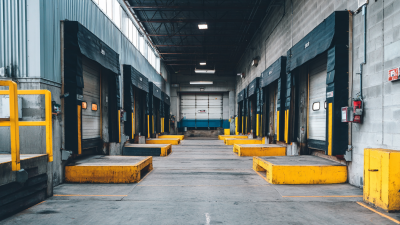
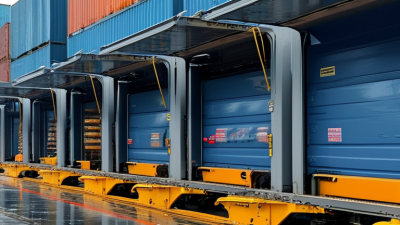
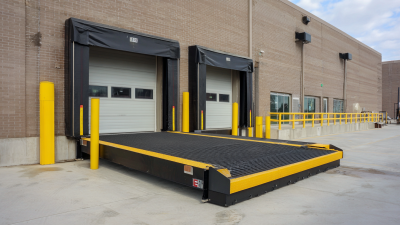
Choosing a manual dock leveler is not simply a matter of comparing prices. It is a practical decision involving trailer heights, forklift traffic, load weights, and daily working conditions. A leveler may look sturdy in a catalog, yet feel unsuitable when operators handle uneven pallets during a busy shift.
John Nofsinger, a longtime loading-dock equipment executive, puts the principle clearly: “A dock leveler must fit the operation, not merely the opening.” That observation deserves attention. The dock height, pit dimensions, lip length, and rated capacity must match the facility’s actual workflow. Measure carefully. Guessing can become expensive.
A reliable manual dock leveler should move smoothly, hold its position, and support safe vehicle loading. Inspect the hinge points, deck plate, lip, springs, and operating handle. Ask how often maintenance will be required, especially where dust, rain, or cold temperatures are common. A simple design is valuable, but simplicity does not excuse weak construction or poor installation.
The operator’s experience also matters. Can one person raise and position the leveler without awkward movement? Is the handle accessible from a safe standing position? These details are easy to overlook.
There is no perfect choice. A low-cost model may satisfy light warehouse use but struggle under repeated heavy loading. I have seen specifications appear adequate until real pallet traffic exposed their limits. Therefore, compare expected use with rated performance, installation requirements, and service support before selecting a manual dock leveler. The right model should make ordinary loading feel controlled, predictable, and uneventful.
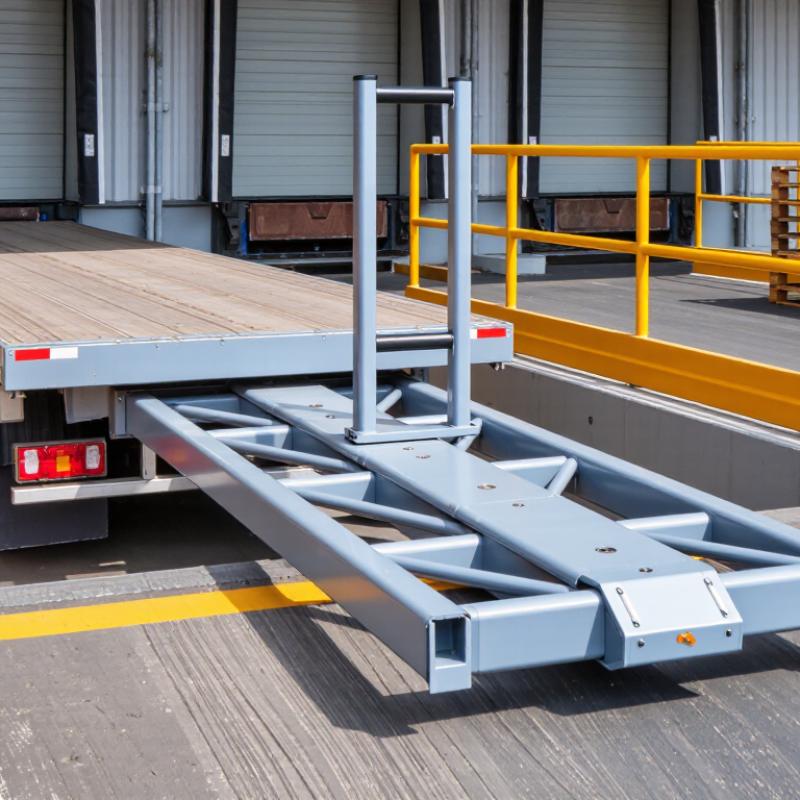
A manual dock leveler bridges the gap between a loading dock and a trailer. Its role is simple, but the working conditions are not. Define the daily load before choosing one. Record forklift weight, cargo weight, wheel loads, trailer heights, and traffic frequency. A pallet may weigh 1,200 kilograms, while the forklift adds another 4,000 kilograms. The leveler must handle the combined load, not the pallet alone.
Site conditions also shape the specification. Measure the dock height and the trailer bed range during actual shifts. Rain, snow, dust, and washdown water can reduce traction and accelerate corrosion. Cold-storage facilities need materials and lubricants suited to low temperatures. Narrow pits may restrict deck movement. Uneven yard surfaces can create larger height changes than expected. ANSI MH30.1 provides design and performance guidance for industrial dock levelers, so it is a useful reference during selection.
Safety deserves a practical check. The U.S. Bureau of Labor Statistics reported 885 fatal work injuries involving falls, slips, and trips in its 2023 Census of Fatal Occupational Injuries. That figure is not specific to docks, but it shows the consequences of poor access design. A leveler should include visible safety markings, reliable lip support, and controlled operating effort. Workers should inspect hinges, springs, lips, and pit edges regularly. A clean specification can still fail in practice. I would rather question an optimistic load estimate than discover the mistake beneath a moving forklift.
How to Choose a Manual Dock Leveler?
Compare Dock Leveler Types, Sizes, and Load Capacities
A manual dock leveler uses a pull chain, handle, or spring mechanism to bridge the gap between a dock and trailer. It needs no motor or hydraulic power, which can simplify maintenance. A pit-mounted model suits frequent loading and offers a broader height range. An edge-of-dock leveler needs less structural work and fits smaller facilities. However, its working range is usually more limited. That difference matters when trailers vary widely in height.
Measure the dock height, trailer bed range, doorway width, and available pit space before choosing a size. Common platforms are about 6 or 7 feet wide. Lengths often range from 6 to 8 feet. A longer deck may improve the approach angle, but it also needs more clearance. Check the lip length and hinge position carefully. Small measurement errors can create dangerous gaps. It happens more often than expected.
Load capacity must include the forklift, cargo, and movement impact. A 30,000-pound rating may be unsuitable if the actual combined load approaches that limit repeatedly. Consider wheel loads, traffic frequency, and uneven loading. Static capacity alone is not enough. Ask for rated capacity details and installation requirements. Review the dock structure with a qualified professional. The cheapest option may become expensive after repeated repairs. Reflect on operating habits, not just equipment specifications.
Manual dock levelers are commonly selected by comparing operating type, platform size, and rated capacity. Mechanical models typically use a pull-chain or spring-assisted lip mechanism, while hydraulic and air-powered models use powered lifting systems for easier operation. The capacities shown below are common nominal ratings for general warehouse applications; the final selection should also consider forklift weight, cargo weight, traffic frequency, and impact loads.
Choosing a manual dock leveler starts with the safety conditions around the dock, not the lowest purchase price. The U.S. Bureau of Labor Statistics recorded 885 fatal falls, slips, and trips in 2023. That figure covers all industries, but it shows why a small height gap deserves serious attention. Look for a positive lip hold, a restrained deck, and clear operating handles. ANSI MH30.1 guidance also emphasizes rated capacity, structural performance, and controlled movement. A leveler should remain stable when a forklift crosses the transition.
Materials must match the working environment. Painted steel suits many indoor docks, while galvanized or corrosion-resistant finishes can better withstand moisture and salt. Check the deck plate thickness, hinge design, weld quality, and stated load rating. Do not compare only the forklift’s weight. Include the pallet, goods, wheel loads, and repeated impact from daily traffic. OSHA 29 CFR 1910.26 requires dockboards to be secured and provides requirements for safe use. Operators still need training, inspections, and a visible exclusion zone. A damaged lip can look harmless.
It is easy to overestimate capacity.
Measure the trailer floor height, dock height, and expected slope before ordering. A manual model may require more physical effort than planned, especially during cold weather or frequent shifts. That gap matters. A practical inspection log should record loose hardware, bent plates, damaged springs, and unusual noise. I would still test the chosen unit with the actual forklift and load, because a specification sheet cannot reveal every site-specific problem.
Choosing a manual dock leveler starts with dock compatibility, not price. Measure the dock height, trailer bed range, pit width, lip length, and rated load. A leveler must bridge the vertical gap without forcing forklifts over a sharp edge. Check the dock face, bumpers, door clearance, and trailer restraint location together. One overlooked bumper projection can reduce usable lip engagement.
Installation space deserves equal attention. Confirm the pit depth, rear hinge clearance, operating handle path, and nearby drainage. An experienced installer should inspect concrete condition before cutting or anchoring. A perfect drawing may still fail when old concrete is uneven. Allow space for safe operator access, especially where a handle swings beside a doorway. OSHA’s 29 CFR 1910.26 requires dockboards to be secured and used safely; that requirement should guide the layout, not merely the final inspection.
Maintenance needs are often underestimated. Select replaceable hinge pins, accessible grease points, visible welds, and a lip that can be checked without entering traffic lanes. Create a simple inspection log for cracks, bent lips, loose fasteners, and hydraulic-free mechanical movement. The U.S. Bureau of Labor Statistics reported 1,069 fatal work injuries involving falls, slips, and trips in 2022. That figure covers all industries, not only docks, but it shows why small access defects matter. Monthly checks are useful, yet high-volume docks may need weekly observation. Some assumptions will be wrong. Revise the schedule after measuring actual cycles and damage patterns.
| Manual Dock Leveler Type | Typical Dock Compatibility | Typical Capacity Range* | Required Installation Space | Operating Range | Maintenance Needs | Best Fit |
|---|---|---|---|---|---|---|
| Edge-of-Dock Leveler | Existing loading dock with a structurally suitable vertical face and adequate dock height. | Approximately 20,000–35,000 lb (9,072–15,876 kg), depending on design. | Mounted at the dock edge; normally requires less building alteration than a recessed pit model. | Commonly accommodates moderate height differences between the dock and vehicle bed; confirm the rated lip and deck range. | Inspect the hinge, lip, handle, springs, welds, and bumpers. Lubricate moving points according to the service schedule. | Facilities seeking a cost-effective solution with limited construction work and moderate trailer variation. |
| Pit-Mounted Mechanical Leveler | Dock positions designed for a recessed pit and regular use by trailers with different bed heights. | Approximately 25,000–40,000 lb (11,340–18,144 kg), depending on the model and load distribution. | Requires a properly engineered pit, structural supports, drainage considerations, and sufficient clearance below the deck. | Usually provides a wider working range than edge-of-dock units; verify the exact lip extension and deck travel. | Check the lifting mechanism, chains or springs, hinges, lip, deck supports, and pit for debris or corrosion. | Busy loading bays that need broader vehicle compatibility and have space for permanent construction. |
| Portable Manual Dock Plate | Level or near-level dock-to-truck transfers where the plate can be secured against movement. | Often selected for lighter-duty pallet-jack or forklift traffic; capacity must be matched to the equipment and wheel loads. | No permanent pit; requires storage space, clear access, and a suitable dock edge. | Best for small height differences. Confirm the maximum gap, slope, lip contact, and traction requirements. | Inspect locking legs, curbs, handles, welds, deck surface, and warning markings before each use. | Occasional loading, temporary dock positions, or operations that need a movable solution. |
| Mechanical Leveler with Safety Lip | Docks where the deck must bridge the trailer floor and remain supported during loading. | Capacity varies widely; select by rated load, axle load, wheel load, and traffic frequency rather than deck size alone. | May be edge-mounted or pit-mounted; the lip must have adequate clearance to deploy and rest securely on the trailer. | Useful where trailer movement and changing bed heights require controlled bridging; verify the manufacturer’s safe range. | Regularly inspect the lip, hold-down assembly, counterbalance components, hinges, and structural connections. | Applications that require a defined transfer surface and additional protection against unintended movement. |
*Capacity ranges are typical planning references only. Actual ratings vary by design, load distribution, wheel loads, operating frequency, and installation conditions. Always use the product’s certified rating and applicable local safety requirements.
Choosing a manual dock leveler starts with the work, not the catalog price. A busy warehouse may need a stronger platform, reinforced hinges, and a longer lip. Occasional loading usually allows a simpler model. Measure the dock height, truck range, pit dimensions, and available clearance before comparing prices. A small measurement error can create expensive installation problems.
Cost matters beyond the purchase invoice. Ask about delivery, installation, replacement parts, and routine lubrication. A cheaper leveler may become costly if operators struggle with heavy controls or frequent repairs.
I once underestimated daily traffic when selecting equipment for a storage facility. The leveler worked, but its operating effort slowed loading during peak hours. That mistake changed how I evaluate manual equipment.
Durability depends on steel thickness, weld quality, hinge design, and rated capacity. Match the rating to real loads, including forklifts and uneven weight distribution. Inspect the walking surface and lip regularly for distortion, cracks, or loose hardware.
Choose controls that workers can operate without awkward reaching. Good equipment should feel predictable. It should also suit the people using it every shift.
Check the manual for maintenance intervals and applicable local safety requirements. Even experienced buyers can overlook operator comfort when focusing too closely on price.