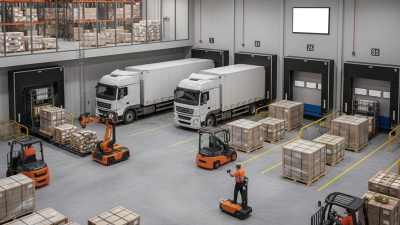
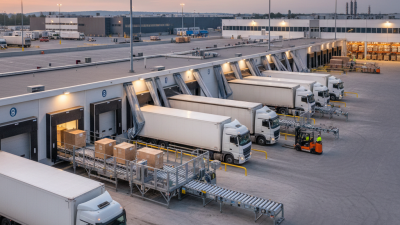
A loading dock is a busy, unforgiving threshold. Trucks reverse, pallet jacks cross concrete, and weather presses against open doors. The right loading dock solutions can make these movements safer and more predictable. Options range from dock levelers and vehicle restraints to shelters, seals, lifts, and integrated controls. The best fit depends on traffic, building layout, cargo, and operating conditions—not simply the newest equipment.
Industry data offers useful context. MHI’s 2024 Annual Industry Report found that 55% of surveyed supply-chain leaders planned to increase investment in technology and innovation. That figure covers supply chains broadly, not dock equipment alone. Still, it reflects growing interest in systems that improve visibility and efficiency. OSHA’s warehousing guidance also highlights hazards involving vehicles, falls, and material handling. These risks converge at the dock, where a small gap or an unsecured trailer can matter. Details matter.
No single design suits every facility. A high-volume distribution center may need powered levelers and automated restraints, while a smaller site may prioritize a reliable mechanical leveler and weather protection. An experienced assessment should consider trailer heights, daily door cycles, temperature control, maintenance access, and worker movement. These are practical starting points, not a substitute for a site-specific safety review. Even a well-planned dock needs upkeep. Equipment wears, workflows change, and assumptions can age faster than expected.
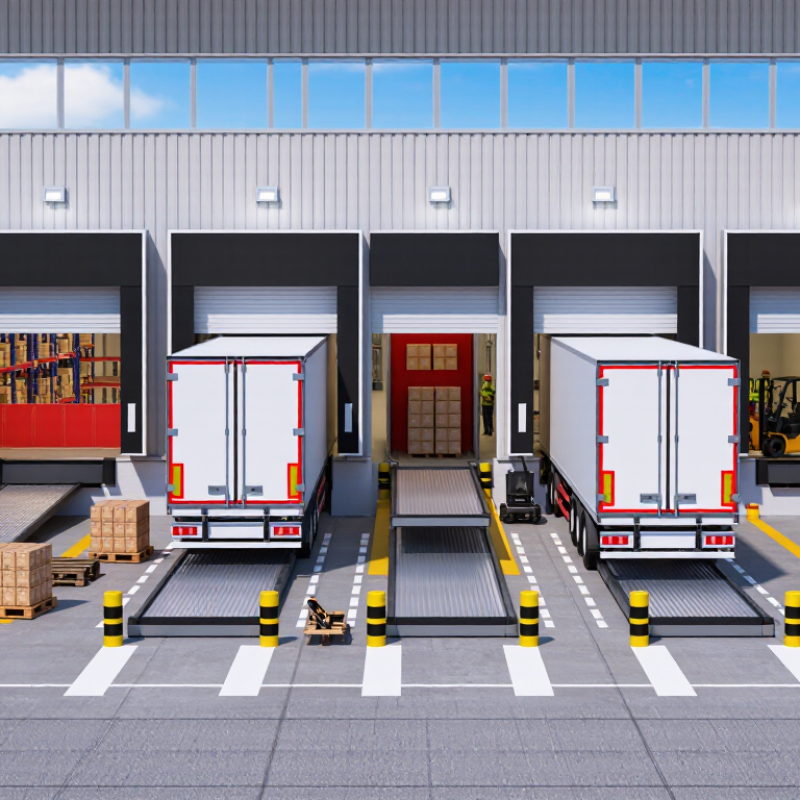
A loading dock solution should reflect how often the dock operates, what it handles, and how much space it has. A busy distribution site may need a powered dock leveler built for frequent cycles. A smaller operation with occasional deliveries may find a mechanical leveler sufficient. Check the full load, including the forklift or pallet jack, rather than freight weight alone. Capacity matters.
Measure trailer-bed heights, door openings, and the distance between the dock and yard. These details help determine whether a leveler, dock lift, or yard ramp fits the site. Where trailer heights vary widely, an adjustable leveler can bridge the gap. A dock lift may suit a facility without a raised dock, but it needs room for safe movement. Small details matter.
Traffic patterns also shape the choice. Vehicle restraints can help secure compatible trailers during loading, while dock seals or shelters can reduce gaps around parked vehicles. Check vehicle types and approach angles before selecting them. Tight yards may limit turning space or prevent certain equipment from being used. Maintenance access matters, too. In practice, teams sometimes focus on equipment ratings and overlook how operators move through the area. That is worth reviewing during a site assessment, because a technically suitable solution can still create bottlenecks if its layout conflicts with daily routines.
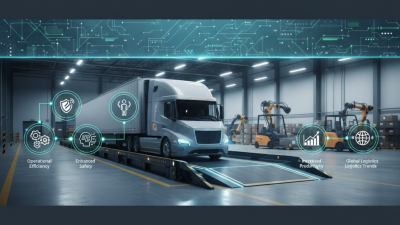
A trailer may sit several inches above or below a fixed dock, leaving a steep gap for forklifts and pallet jacks. Dock levelers create a sloped bridge between the dock and trailer bed. They suit sites where trailer heights vary within the equipment’s operating range. Pit-mounted models sit flush with the floor when idle; edge-of-dock units can work where a pit is impractical. Small mismatch. Big consequence.
When height differences exceed a leveler’s range, a dock lift raises or lowers the load platform itself. That can help facilities serving low trailers, ground-level vehicles, or multiple vehicle types. The trade-off is space and cycle time: a lift needs room to move and may take longer than crossing a leveler. OSHA’s 29 CFR 1910.26 requires dockboards to support their maximum intended load. Capacity matters. So does secure placement.
Check the actual fleet, not just a typical trailer. Measure bed heights across vehicles, loaded and unloaded, and note the smallest forklift’s clearance and turning space. BLS counted 5,283 fatal work injuries across U.S. workplaces in 2023; the figure is not dock-specific, but it underscores why transitions deserve attention. A leveler or lift cannot correct poor alignment, damaged plates, or rushed procedures. Inspections help, though they are easy to postpone.
Truck movement at a loading dock can shift a forklift, a pallet, and a person in seconds. OSHA 29 CFR 1910.178(k)(1) addresses this risk directly. It requires highway-truck brakes to be set and wheel chocks placed under the rear wheels while powered industrial trucks board the vehicle. The requirement is practical, not decorative.
Mechanical dock restraints add another layer by securing a trailer to the dock. Workers should confirm the restraint is engaged and follow the site’s procedure before forklift entry. A restraint should not be casually treated as a replacement for the standard’s stated brake-and-chock steps. Clear signals between the driver and dock team help prevent premature movement.
Details matter. Check that chocks are suitable for the truck and positioned firmly against the tires, rather than resting on loose gravel or debris. Inspect restraints and chocks for wear, and pause if a trailer shifts or the setup looks uncertain. Not every dock is alike. A written procedure can still leave gaps if workers do not rehearse it under real loading conditions. Safety depends on equipment, inspection, and consistent communication.
| Solution | How It Controls Movement | Typical Use | OSHA Rule 1910.178(k)(1) Consideration | Practical Checks |
|---|---|---|---|---|
| Wheel chocks | Wedges placed against the truck or trailer wheels to help prevent rolling. | Loading or unloading vehicles at a dock where wheel chocks are used as the movement-control measure. | The rule states that brakes must be set and wheel chocks placed under the rear wheels to prevent movement while working on trucks or trailers. | Set the brakes, position chocks securely, and check that they are suitable for the vehicle and surface. |
| Mechanical vehicle restraints | A dock-mounted mechanism engages a suitable part of the trailer, such as its rear impact guard, to help limit separation from the dock. | Facilities seeking a fixed, dock-integrated restraint in addition to operating procedures. | Do not assume a restraint automatically replaces the specific brake-setting and wheel-chocking requirements in this paragraph. Confirm applicable OSHA guidance and site procedures. | Check that the restraint engages correctly and that the vehicle and dock are compatible with the device. |
| Powered vehicle restraints | Use powered equipment to engage or release a restraint; status lights or alarms may communicate its state. | Docks where operators need a powered, monitored restraint system. | Use the system according to its instructions and the facility’s safety procedures; do not treat indicator lights alone as proof that all required precautions are in place. | Verify engagement, indicator function, and the procedure for power loss or a restraint fault. |
| Trailer supports or stabilizing jacks | Support an uncoupled semitrailer to reduce the risk of its front end rising during loading or unloading. | Uncoupled semitrailers that may need additional support during dock operations. | OSHA 29 CFR 1910.178(k)(2) notes that fixed jacks may be necessary to support a semitrailer during loading or unloading when it is not coupled to a tractor. | Assess trailer condition, support placement, ground stability, and the equipment manufacturer’s instructions. |
| Dock communication signals | Lights, signs, alarms, or agreed procedures communicate whether a vehicle may approach, depart, or be loaded. | As an additional coordination measure for drivers, dock workers, and forklift operators. | Communication measures complement physical movement controls; they do not themselves set brakes or place wheel chocks. | Use clear, consistent signals and ensure workers know what to do if a signal is missing or unclear. |
| Regulatory reference: OSHA 29 CFR 1910.178(k). The standard states that truck or trailer brakes must be set and wheel chocks placed under the rear wheels to prevent movement while loading or unloading. Consult the current standard and applicable site procedures when selecting controls. | ||||
Loading dock seals and shelters reduce the gap between a building and a truck during loading. Seals compress against the trailer sides and roof, while shelters use a projecting frame and flexible curtains. Both help limit rain, wind, dust, and outside air entering the dock. A better fit can also make it easier to maintain comfortable working conditions indoors. But neither option creates a perfect barrier.
Choosing a solution starts with the vehicles using the dock. Measure trailer widths, heights, and the dock opening; note unusual door frames and frequent vehicle changes. A seal that is too tight may wear quickly or obstruct trailer doors. A shelter may suit sites with varied vehicle sizes, but its curtains need room to move. We sometimes focus too much on the product and too little on daily trailer variation. That is worth reconsidering.
Tips: Watch the dock during a busy shift. Look for daylight around the trailer, torn curtain edges, or water marks on the floor. Check compression and fasteners during routine inspections. Small gaps matter. Replace worn parts promptly, and review the fit when the vehicle mix changes.
At a loading dock, an open edge can be hard to see when a trailer is backed into place. Under OSHA’s general-industry standard, 29 CFR 1910.28, employees on walking-working surfaces with an unprotected side or edge 4 feet or more above a lower level must be protected from falls. Four feet is a trigger, not a design target. A dock opening may expose workers to a concrete floor, vehicle bed, or other lower surface.
Guardrails, properly designed gates, or suitable personal fall-protection systems may help control the hazard. The right choice depends on the dock layout and work in progress. A dock leveler bridges the gap for equipment; it does not protect an open edge. When a trailer is absent, a barrier can prevent someone from stepping into the opening. During loading, the control must still allow safe movement. That can be the difficult part.
Inspect barriers and access points regularly. Check for loose rails, damaged gates, and gaps near the dockboard. Train workers to recognize changing conditions, especially when trucks move or doors open. A four-foot measurement alone does not make a dock safe; the actual exposure matters. Some details are easy to overlook.